

It’s true. You can become an insurance adjuster in just a few weeks by following 5 easy steps. It takes hard work, but it’s a relatively simple process, especially when compared to the cost and time it takes to get a college or technical degree. You can also complete almost all the requirements online, on your own time.
In this article, we’ll cover how to become an insurance adjuster in 5 steps, including:
- Determining if insurance adjusting is a good fit for you
- Choosing the type of adjuster you want to be
- Getting your adjuster license
- Learning additional skills
- Applying for jobs
Let’s get started.
STEP 1: VERIFY THAT INSURANCE CLAIMS ADJUSTING IS RIGHT FOR YOU
One of the last ‘hidden gem’ careers in America, insurance adjusting is a stable industry with excellent earning potential, but it is not for everybody:
- Hard and Soft Skills Required:
The hard skills and qualifications necessary to become an adjuster are relatively simple; be at least 18 years old, hold a valid driver’s license, be a bonafide resident of your state, etc. But it’s the soft qualities that set great adjusters apart; self-discipline, an excellent work ethic, and great communication skills. - Challenging but Rewarding:
Claims adjusting is a challenging but truly rewarding career. The pay is certainly good and helping people get back on their feet after a loss is a deeply satisfying line of work. - Always in Demand:
Insurance adjusters are in demand in any economy since claims remain steady regardless of economic factors. When it comes to insurance adjuster salaries, annual earnings in excess of $100,000 are realistic for independent claims adjusters, while staff adjusters who work directly for insurance carriers earn salaries ranging from $45,000 to $80,000 or more. - The Challenge and Opportunity of Catastrophes:
In catastrophe situations (e.g. after a Hurricane Harvey or Irma) the huge volume of claims causes a massive increase in the demand for adjusters. During these spikes, a good adjuster can earn more in a few months than he or she would normally earn in an entire year. But you have to be ready to go at the drop of a hat and be prepared to work in an extremely challenging environment. - The Future is Bright:
The industry is rapidly evolving, and employers are struggling to fill the vacuum from a generation of adjusters who are retiring out of the industry. The country is also facing an increasing number of damaging weather events, many of which are more potent than in generations past.
Free Introductory Course on Insurance Claims Adjusting
Interested in becoming an insurance adjuster but still have questions? Join on of our free, live webinars. Your host, Pablo Gonzalez, walks you through what you need to know to get started and get to work.
Register for the Free Course
Step 2: Choose the Type of Insurance Adjuster you Will Be
Most insurance adjusters choose between two career paths, electing to become either a staff adjuster or an independent insurance adjuster.
- Staff Adjusters: work as year-round employees, typically full-time, for an insurance company.
- Independent Insurance Adjusters: are contractors who work for one or more Insurance Adjusting firms. The IA firms usually have a multitude of insurance companies as clients and the independent adjuster may handle claims for any one of those insurers, often multiple at once.
- Catastrophe Adjusters: can be either staff or independent, and will travel to hard-hit areas as needed.
- Inside or Desk Adjusters: handle claims from an office or call center. They may have field adjusters or contractors perform the inspection and then use the results to estimate and settle the claim.
Both types of adjusters — staff employees and independent contractors — may handle both regular ‘daily claims’ that happen on a normal basis, as well as catastrophe claims from weather events and manmade disasters.
There are many, many more directions you can take with your claims career. As they gain experience, many adjusters will specialize in a certain type of work or claim, such as CAT, auto, workers’ comp, or marine. Regardless of what career path you envision, you will need to get licensed to be successful.
STEP 3: GET YOUR INSURANCE ADJUSTER LICENSE
This is where AdjusterPro comes in! No matter where you live, we have the training to help you obtain your adjuster license.
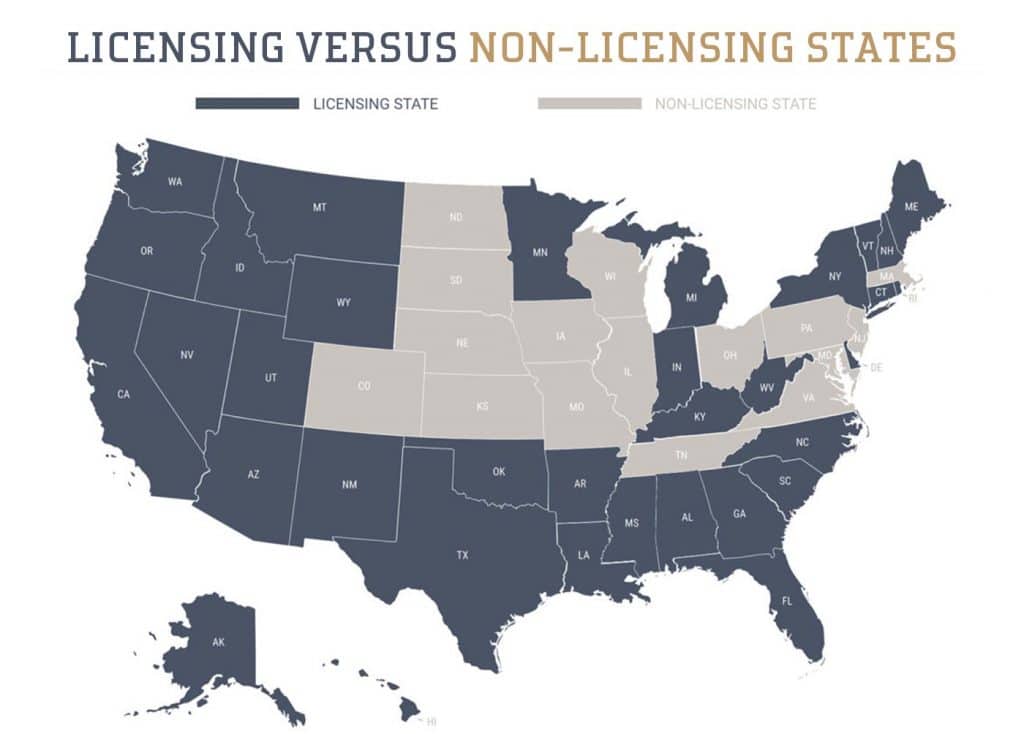
To start, you’ll need to know whether your home state licenses insurance adjusters. (Most do!) However, Colorado, Kansas, Nebraska, South Dakota, North Dakota, Missouri, Iowa, Illinois, Wisconsin, Tennessee, Ohio, Virginia, Maryland, Pennsylvania, New Jersey, and Massachusetts do not license adjusters.
- If Your Home State Issues Adjuster Licenses:
If you live in a licensing state, you must obtain your home state license first. Our courses will fully prepare you to ace your state’s licensing exam. And in some cases, we can even issue the exam or exemption from the state exam. To see what type and course are needed for your home state, visit our Adjuster Licensing Courses page. - If Your State Doesn’t License Insurance Adjusters:
Even if you live in a nonlicensing state, obtaining a license is vital to your success as an adjuster. Because while you might not need a license to work in your state, you will need one to work claims anywhere else. In fact, most Independent Adjusting Firms require you to be licensed before applying, regardless of their, or your, location. We recommend getting a Designated Home State (or DHS) license from Florida. Our Florida Certified Adjuster Course satisfies all the requirements to obtain your Florida DHS license. If you want to learn more about the DHS license and why it’s so important to your success, visit our When Does An Adjuster Need a DHS blog article. - The Application Process:
Application instructions and requirements vary by state but you will need to formally submit your application and pay your fees after you pass the state exam (or equivalent.) Every AdjusterPro course includes step-by-step instructions for obtaining your state’s license. Or you can see full instructions by visiting The AdjusterPro Blog and typing your state into the blog search bar. - Apply for Reciprocal Licenses:
Once you receive your adjuster license, you’ll want to apply for reciprocal licenses in the states you are most likely to work in. The Gulf Coast and Eastern states are often favored by employers due to the high volume of claims. For most states, you’ll only need to complete an application and pay your fees to receive a reciprocal license – no need to take a test for every state license!
Is Claims Adjusting Right for You?
In our ebook, Co-Founder Adam Gardiner shares his personal story and industry experience to help you decide if a career in claims adjusting is a good fit for you.
STEP 4: LEARN THE MOST ESSENTIAL SKILLS
An insurance adjuster license is only the starting point of your new career. Software training is the next step…but good adjusters never stop adding to their resume and skill set.
Xactimate Training:

Proficiency in the industry-standard claims writing software, Xactimate, is critical for success in this career field. It is the top software used by adjusting firms and frankly, you won’t be able to successfully close claims until you learn it. Our Tactical Xactimate Training teaches you everything you need to know to start working in the field. And it’s one of the highest-rated training courses in the industry.
State Farm Certification:
Carrier certifications are often required to work claims for a specific insurance company. We recommend obtaining your State Farm Certification as soon as you can as they are a bit harder to come by than most carrier certifications. Once you’ve been hired, your employer will recommend additional training as needed.
Adjuster Success Method:
This one-of-a-kind new training course was developed to give newly licensed adjusters an inside look at the claims industry and help them develop a systematic approach to launching their career as a claims adjuster. In the Adjuster Success Method, veteran adjusters share best practices for getting hired, what tools you’ll need to get the job done, show you how to successfully close your first claims.
“Proficiency in Xactimate is the single most important technical skill a new adjuster must acquire.”
Adam Gardiner, Co-Founder of AdjusterPro
STEP 5: LAND YOUR FIRST INSURANCE ADJUSTING JOB
Whether you are looking for employment as a staff adjuster or prefer to remain independent and handle claims on a contractual basis, treat your job search as a job in itself, and you will not be disappointed.
- Reach out to IA Firms:
Contact the HR (human resource) departments at major adjusting firms to inquire about openings and their hiring process. - Get your resume right and ready:
Create a resume that is specifically tailored to the claims industry with an understanding of what employers want. - Expand your knowledge:
Consider purchasing the Total Adjuster Package. This discounted bundle includes your licensing course, Xactimate training, and the Adjuster Success Method. We share our proven strategy of getting into and succeeding in the claims business. - Roster up:
Get on the rosters of the employers you want with a strategic and intentional campaign. But don’t limit yourself to the largest two or three firms! Today, carriers are increasingly spreading their contracts to medium and even small firms to meet demand. - Then follow up:
Follow up on your resumes, job applications, and personal contacts with diligence. - Network, network, network:
Join local and national industry associations and insurance job boards and network, network, network. - Stay compliant and say “Yes!”:
Keep your licenses current and in good standing. Be prepared to deploy quickly, especially during catastrophe season. When the firms call to fill a position, they usually have a deadline to be on location. They will not wait an extra day or two to suit your timeline so it’s best to always be ready. If you have an opportunity…take it.
Whether you are just starting to consider a possible career as an adjuster or you have specific questions about licensing and compliance, we are here to help.