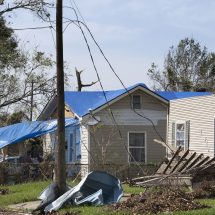
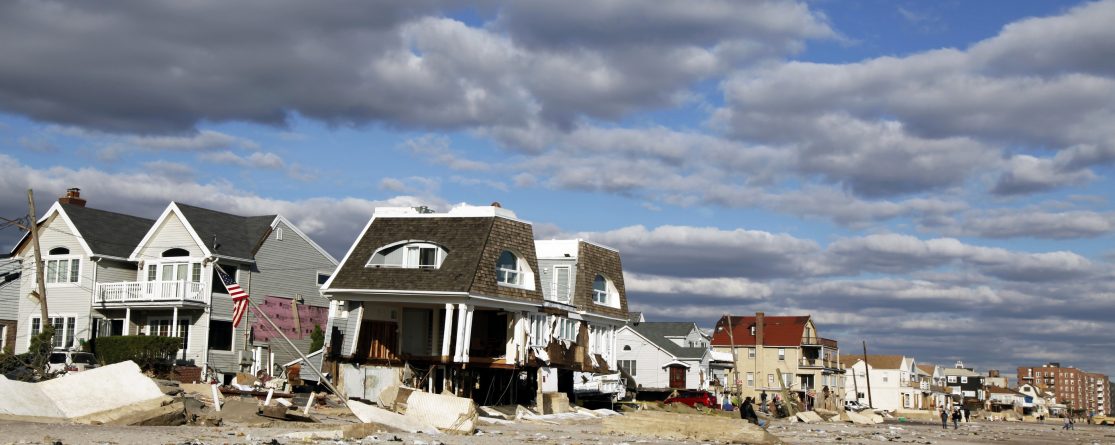
Independent catastrophic insurance claims adjusting, or “CAT” adjusting, is an exciting, lucrative, and largely unknown niche in the insurance industry.
When disaster strikes, these storm troopers answer the call to assist insurance policyholders in recovering from their losses. The work is challenging, personally fulfilling, and can be surprisingly profitable. Follow these 4 steps to become a licensed, trained, ready-to-deploy cat adjuster:
#1: Obtain Your Adjuster License
Insurance adjuster licensing is regulated at the state level – there is no national cat or independent adjuster license. At Adjusterpro, we strongly recommend you start by getting licensed in your home state. Getting licensed in your home state gives you the greatest flexibility and coverage when it comes to obtaining reciprocal licenses in other states. And obtaining reciprocal licenses is an absolute necessity for cat adjusters who are nearly always on the move. You can read more on this subject in our Why Adjusters Should Get Their Home State License First blog article.
Licensing rules vary by state but you can find your state’s specific licensing regulations, as well as a step-by-step guide on how to get your license on the AdjusterPro State Pages or by visit our Blog and searching for your state.
Several states, however, do not require a license to operate as an adjuster.
These are: Colorado, Illinois, Iowa, Kansas, Maryland, Massachusetts, Missouri, Nebraska, New Jersey, Ohio, Pennsylvania, North and South Dakota, Tennessee, Virginia, and Wisconsin.
If you hail from one of these states then I recommend you obtain the Florida 70-20 Nonresident Designated Home State (DHS) License. A ‘Designated Home State’ or DHS license will give you all the benefits of a home state license in terms of reciprocity and coverage. Florida and Texas are two of the most popular DHS licensing options although many more states have a DHS available today. While you can’t go wrong with any of them, Florida tops our list due to cost, quick turnaround time, and reciprocity value.
Why get a license at all if your home state doesn’t require it? For those who truly have no intention of ever working outside their home state, it may be unnecessary. But for those with designs on working as a cat adjuster, where travel to affected regions is standard operating procedure, a Designated Home State license is crucial for your ability to work in other states. More to the point, most independent adjusting firms won’t hire you without one.
#2: Obtain Critical Adjuster Training
For those making career transitions from the residential or commercial contracting industries, additional training may not be necessary. But for those who have little to no experience with construction, loss analysis, estimating software, and/or standard methods of repair, it is tremendously helpful to undertake some practical training.
The most important training a newly licensed adjuster should consider is Xactimate Training. Used by the vast majority of independent adjusters, Xactimate is the most popular estimating program today. There are a lot of courses and resources available today although many are offered by programmers or contractors. Xactimate training from actual adjusters who can teach you how to use the program in a practical way for your career can make all the difference.
Interested in Getting your License but Still Have Questions?
Join one of our Free Claims Adjusting Webinars! We’ll cover what you need to know about licensing, training, and finding work. And our career consultant will answer any questions you have in real-time.
#3: Find a Job
Becoming an adjuster doesn’t make sense unless there is work to do. Thankfully, there has been no shortage of insurance claims over the past few years. And where there are claims, there needs to be claims adjusters. While ultimately there is no silver bullet (outside the handy personal contact) for finding work, understanding the employment landscape will go a long way towards helping you land a job.
Understanding Demand
The bottom line is that the demand for independent adjusters fluctuates greatly and depends on the frequency and severity of catastrophic weather events. In 2005 and 2006, in the wake of Hurricanes Katrina, Rita, and Wilma, finding work as a cat adjuster was almost as simple as raising your hand. The same can be said in 2017 after Hurricanes Harvey, Irma, and Maria, in the record-setting 2020 hurricane season. In other years, however, surprisingly docile weather can result in fewer disasters and fewer spikes in claims.
Today, you simple need to open your eyes to see how much more volatile our weather and climate have become. Recent disasters, such as fires, floods, winter storms, and hurricanes, are costing more money and resulting in more insurance claims than ever before. We have bigger and better homes. We are building on and in floodplains. More people are living in flood zones, coastal zones, and forest fire-vulnerable areas than at any other time in history. This all results in larger and more frequent combined losses.
So where and how do I look for a job?
Start by referencing our Independent Adjusting Firm Directory for contact and background details on employers. Independent adjusting firms maintain deployment “rosters” of qualified adjusters who are eligible for being put to work in the event of a catastrophe. A new independent adjuster should join as many rosters as possible. The ultimate goal is to have a steady stream of invitations to work which can be accepted or declined at your discretion. Remember, you are your own boss!
#4: Maintain Your Adjuster License
Staying on top of continuing education (CE) requirements keeps you in compliance with your adjuster license and also gives you a legitimate opportunity to advance your knowledge base and skills as an adjuster. And we can help! AdjusterPro offers a variety of CE courses and packages for almost every state where its required. Every class is 100% online and can be taken on your own time – just don’t forget to take it before your renewal deadline!
In most states, you’ll also need to pay a renewal fee to re-up your license. Remember, failure to maintain CE compliance can result in very steep penalties and forfeiture of your license. Complete information on CE requirements is available in our state blogs or on our state CE pages.
If you’re considering a career as a catastrophe claims adjuster, we’re here to help. Our career consultants are available to answer your questions openly and honestly via website chat, info@adjusterpro.com, or at 214-329-9030.